

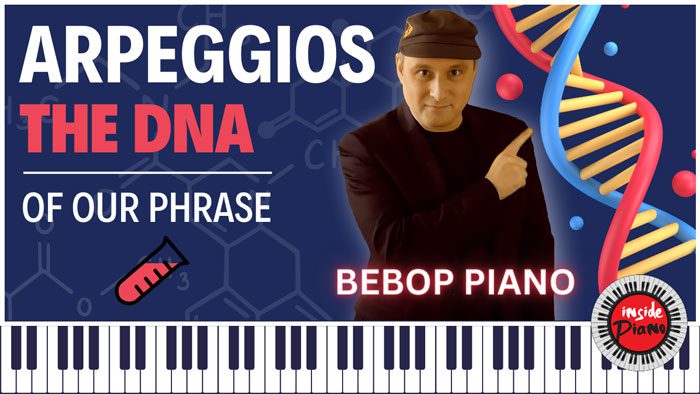
Arpeggios: The Building Blocks of Jazz Piano Improvisation
Unlock your jazz piano creativity. In this piano tutorial we are going to learn how to use arpeggios to develop our melodic lines and elevate our bebop jazz piano improvisation.
ReadPiano for the Modern Musician
Structured courses in modern functional harmony, jazz voicings, and improvisation. For intermediate and advanced pianists who want to understand music, not just play it.
Four interconnected series that take you from foundational harmony to full performance repertoire. Progress at your own pace -- the structure is there when you need it.
Scales, modes, triads, and the chord progressions that drive classical and pop music. You learn not just what to play but why harmony moves the way it does -- the logic underneath every song you already know.
The vocabulary shifts here. Seventh chords, extensions, altered dominants, and jazz progressions replace the triads of Blue. You develop the ability to hear and voice harmony the way jazz pianists do -- dense, colorful, and specific.
This is where you learn to speak, not just spell. You take the harmonic vocabulary of Red and develop the ability to construct real phrases over changes -- lines with direction, tension, and resolution.
You bring everything together on actual music. Jazz standards, bossa nova, pop, classical -- you learn to read a lead sheet as a departure point and build full arrangements that reflect your own musical voice.
Also included: the Essential Series. Technique, fingering, and physical proficiency: the infrastructure that makes everything else possible. Runs in parallel alongside all four series throughout your learning path.
I've been playing, by sight and by ear, and improvising, for over 25 years, and I've been stuck not understanding the jazz language. You are helping me a lot. I like the logical, practical way you think about the jazz idiom. Please don't stop teaching piano.
Your videos are a revelation to me, a classically trained musician. I know all the standard scales, chords, and even advanced chords, but fitting chromaticism in has been difficult. But thanks to your wonderful demonstrations, this is finally becoming clear to me.
I have been playing jazz for a bit now, and I haven't been able to work out why my ideas sounded so weak. I never would have attributed it to the rhythmic weakness of my chosen modes and ill-considered semi-tone choices. Thank you so much!
All five series, PDF scores, backing tracks, and quizzes. Monthly, yearly, or a single lifetime payment.
Start with 18 free lessons. No credit card required. Get a real feel for the teaching style and content before committing to anything.
Start FreeMonthly
Full access, billed monthly
per month
Yearly
Full access, billed once a year
per year Save 50%
One-Time
Pay once, access forever
one-time payment
Compare all plan features in detail
Join 4,000+ students already learning
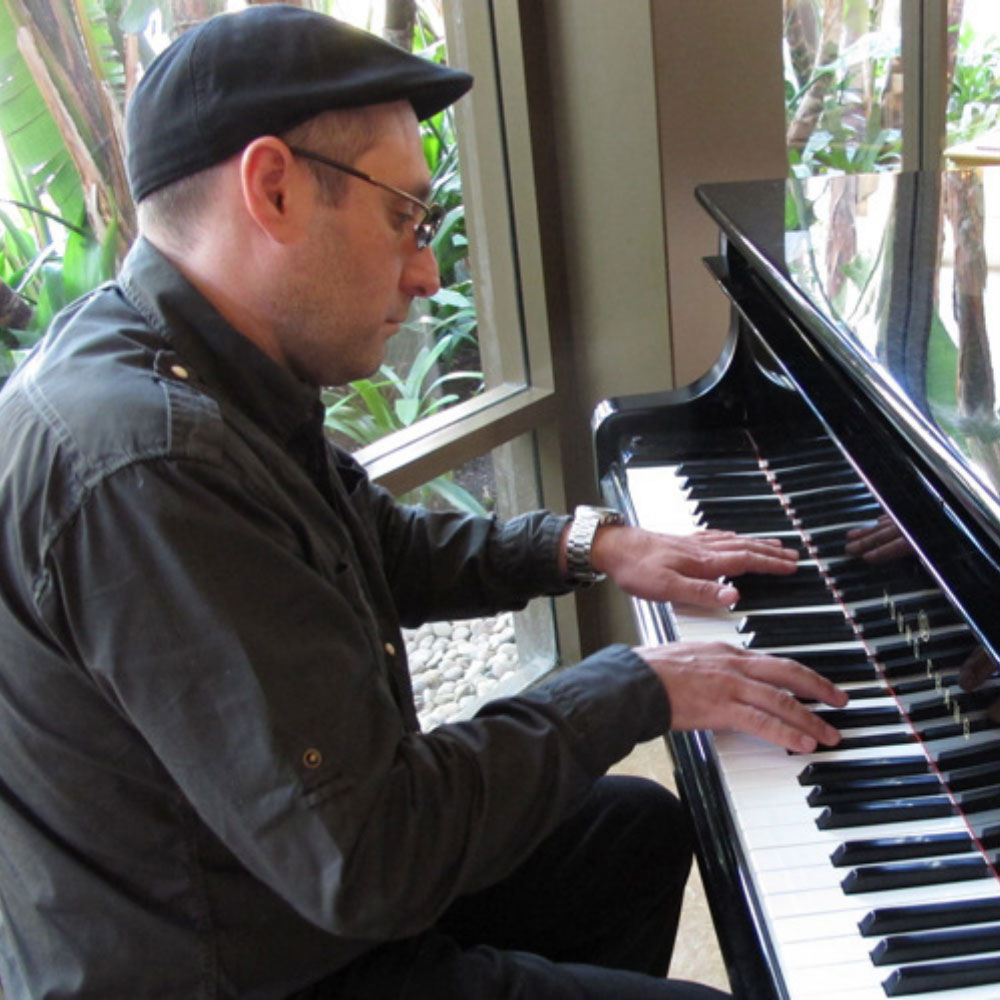
Professional Pianist and Music Educator
Federico Dantoni has spent decades performing and teaching across jazz, classical, and contemporary music. The InsidePiano method grew directly from the real gaps he encountered working with intermediate and advanced students: musicians who could play, but couldn't hear why what they were playing worked.
The curriculum is built on the principle that understanding harmony changes how you practice, how you improvise, and ultimately how you play. Not as abstract theory. As a practical toolkit you use at the keyboard.
Unlock your jazz piano creativity. In this piano tutorial we are going to learn how to use arpeggios to develop our melodic lines and elevate our bebop jazz piano improvisation.
Read
Unlock Jazz Piano Improv! Ditch scales, master Bebop language. Learn guide tones, secrets to sound like Charlie Parker. Free video course inside!
Read
Discover how the hexatonic scales can transform your piano improvisation. Move beyond the limits of the Major Scale and enhance your Jazz Solos.
Read